Toast
It's way more complex than it seems (and so are we)

Yesterday I got to see the inside of my toaster. The outer silver part was removed during a repair cafe when someone was trying to help me fix the right side that won’t stay down. Freed from the shell, I could see how the levers connect to the heating coils. Next to each lever was a small circuitboard. It surprised me that there are circuitboards in my toaster, a little machine that is neither particularly fancy nor brand new.
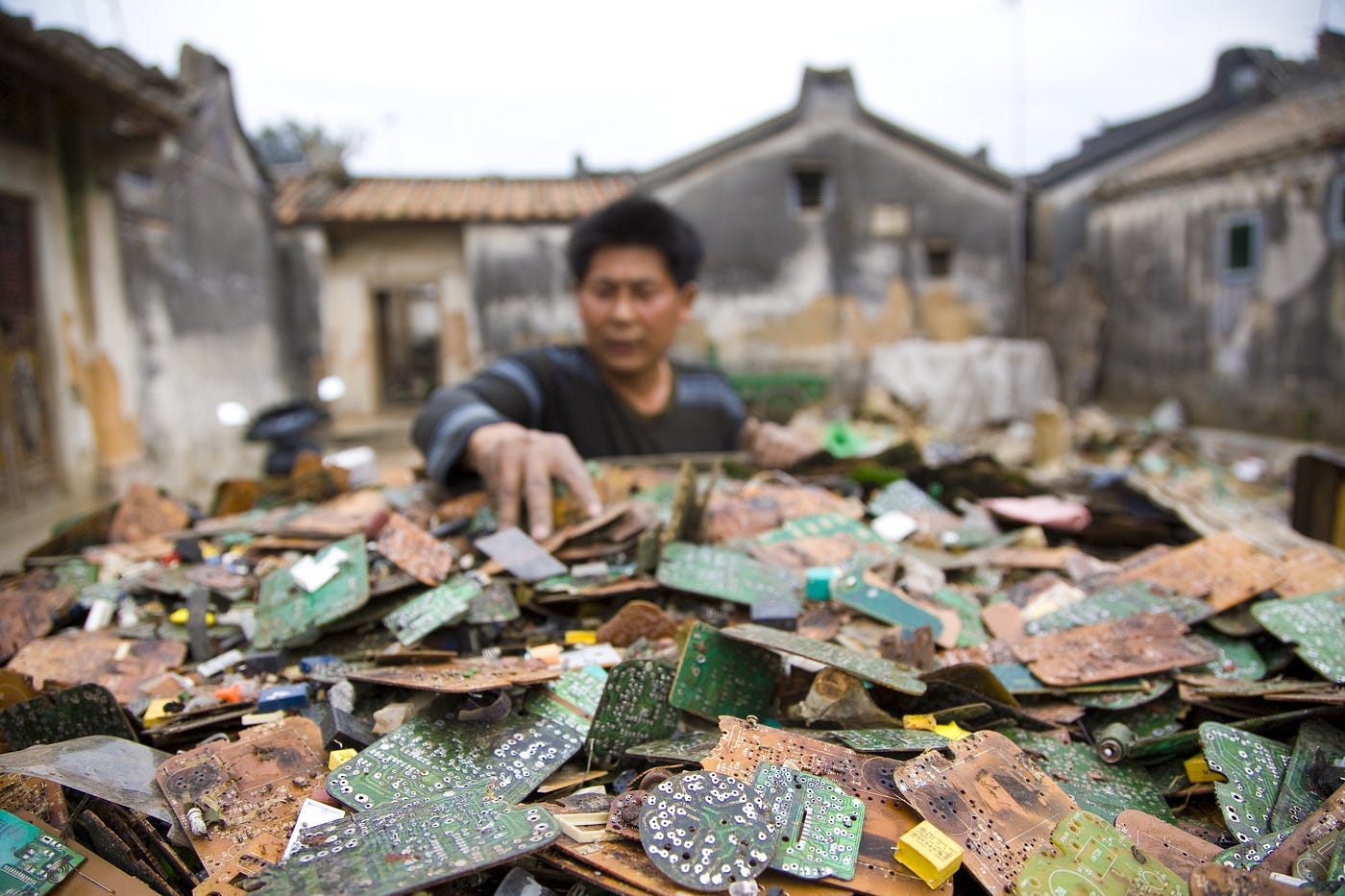
These small yet ubiquitous connectors of modern life provide ease and speed but are also so hidden as to be invisible most of the time — unless you have some nice volunteer who is willing to take apart your toaster for free. They also come with equally invisible problems: “Printed circuit boards are particularly toxic and difficult to recycle, and are often dumped into landfills, on open land or in water, where they pollute the soil and the water systems, damaging human health and the environment.” (Source: Turning the Toxic Tide of Printed Circuit Board E-Waste - the image above is in China and from the same article.)
Something about this feels important and metaphorical. The toaster that brings me soothing warm bread with melted butter — a carrier of childhood memories — contains technology that the majority of us don’t understand and, hence, are unable to care for ourselves, and within that technology is a future toxic remnant for someone somewhere else to grapple with. If the toaster stops working entirely (and mine is still limping along, despite the good-intentioned attempt) and I decide to toss it, I’m doing so now with full knowledge of what it contains. And where parts of it will end up.
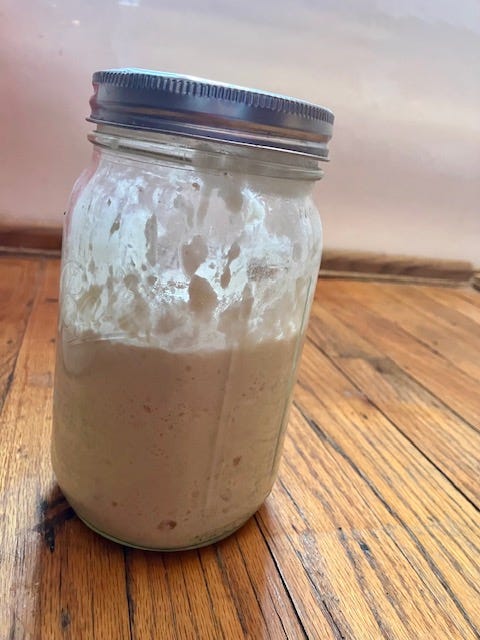
At the same time that this whole toaster repair is happening, I’m also on my third attempt at making a loaf of sourdough bread since returning from a trip a week ago. The frigid temperatures have made this a slower process than usual. My first loaf took three days to properly rise and then got promptly eaten by the dog. He’s a counter surfer—a term that was new to me prior to Obi moving in with us and bringing his bounding legs, goat like appetite, and small stature to a house accustomed to labs and pitbulls. We weren’t vigilant and, BLINK, the bread was gone. (He had a good gluten-induced nap but otherwise did not thank me for my efforts.)
The next batch made midweek suffered from mis-measuring somewhere along the way and became a heavy blob that wasn’t even worth trying to bake. Now, the third batch is underway. I fed the starter this morning and tucked it into a small bathroom with a closed door that heats up more than any other room in the house. With careful attention, I’ll have bread by tomorrow night.
As anyone who bakes knows, bread is incredibly simple—flour, water, and salt and fermented starter or yeast. Not surprising that the staff of life is simplicity, basic, and pure. But also not. Because bread requires patience, attention, the right temperature, some handling but not too much handling. There is so much that goes into bread that is invisible. Much of it similar to what we need to be well — time, patience, attention.
I’m not surprised there’s an organization called Bread Therapy that connects bakers with people in need of slowing down, tactile pleasure, and a sense of accomplishment at making something. (Ummm, all of us, right?) A huge testament to the power of bread comes via one my favorite books in recent years — like by a mile— Breadsong, a cookbook written by then-teenager Kitty Tait.
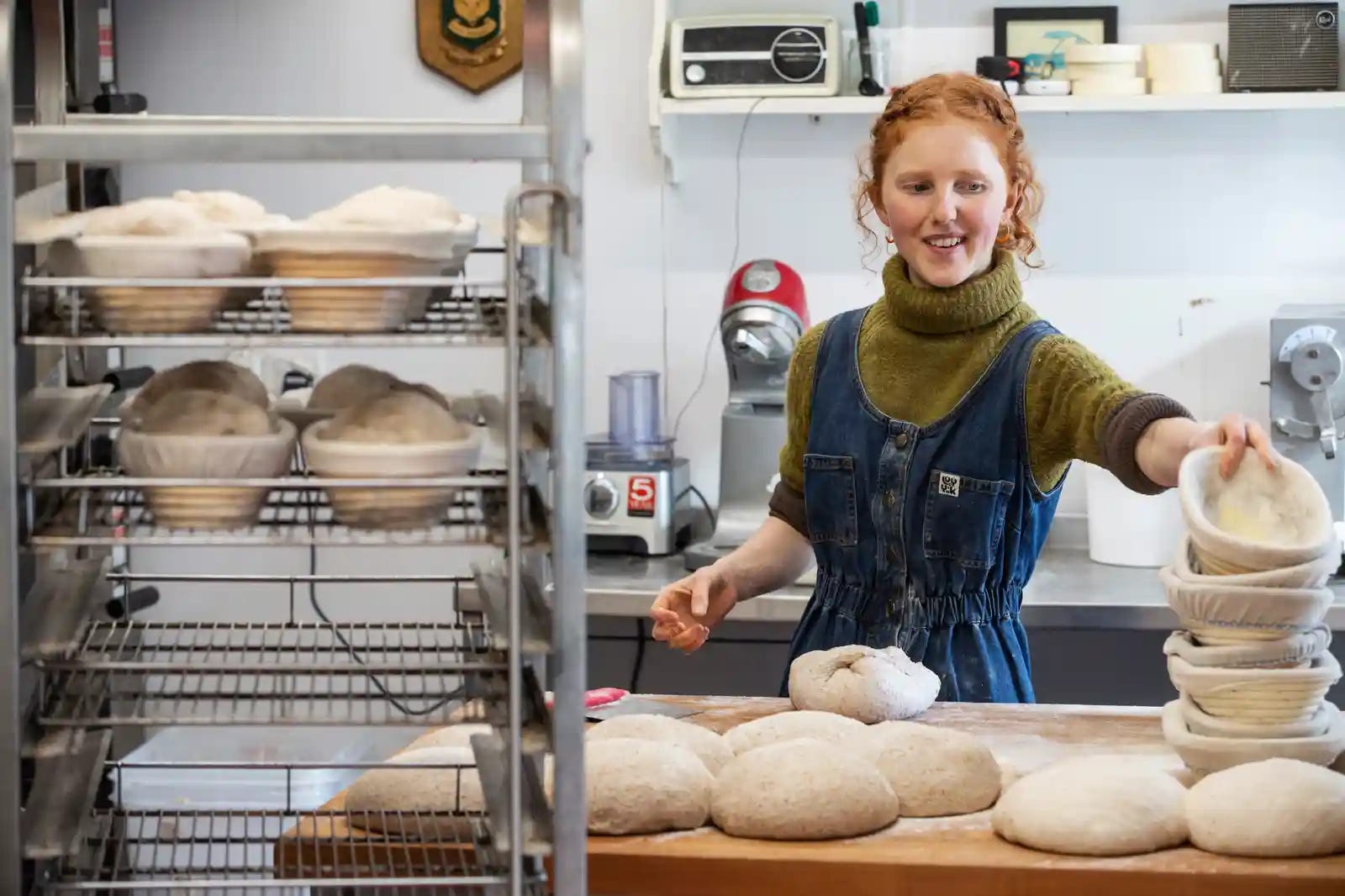
In her early teens, Kitty had to leave high school because of extreme depression. Her father quit his job to stay home and take care of her when she was basically comatose. He tried everything he could think of to switch a gear in his previously playful daughter — dancing, painting, … and baking.
Who knows why we fall in love with a particular person, or why one place in the world feels like home. Kitty will likely never know exactly why bread was her ‘it’—the thing that helped pull her out of her deep anxiety.
She now travels the world to stage in other bakeries and lead workshops, mainly for kids. She’s also developed kits that have been given freely to people in prisons, homeless shelters, and other settings where the powerful qualities of bread are especially needed.
“Bread making is a very empowering tool. Making bread helps you keep calm. It doesn’t mean that depression and anxiety go away but it does bring you joy and can make you feel amazing.” - Kitty Tait
Allow me one more step with this “what’s on the inside is often more complex than what it appears” — which is that the people we interact with every day look one way but are usually much more. Maybe someone you work with appears confident or bubbly — like Kitty Tait! Or they seem slightly angry or defensive. Maybe they’re awkward and shy. And while some of these things might be true, so much more is simultaneously true as well.
Anytime I facilitate a workshop, I end up discovering surprising inner landscapes of some of the members. People who entered seeming reluctant become funny. Someone who seemed like a know it all becomes incredibly tender. It’s so easy to forget this!! So dang easy!!! But we contains multitudes. It’s worth tattooing that somewhere!
It’s like my toaster that makes really yummy snacks and holds these unexpected toxic circuits boards that now make me scratch my head with a mixture of wonder and dread. And it’s like how the bread that’s currently rising in my bathroom is comprised of three ingredients and is full of acids and enzymes produced by its microbial culture (according to researchers, sourdough starter is a conducive habitat for microbes that can support the of 50+ different species of lactic acid bacteria and more than 20 species of yeasts).
We are all the coils waiting to heat and then going cold. We are all the toxic circuit board. We are all the starter needing to be fed. We are all the dough alive with possibility. We are so simple and yet so immensely complicated.

Read Together
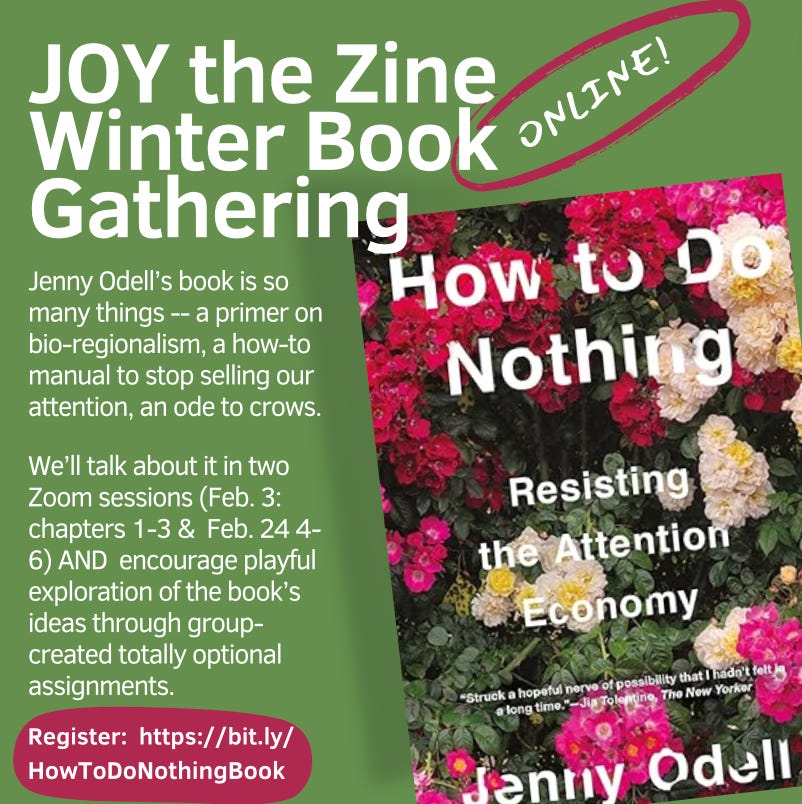
If one of your intentions this year is to look at your tendency toward over-doing, OR if you’re trying to be more mindful of to whom and what you give your attention, OR if you really like reading interesting books in company, consider joining this two-part book conversation.
When and Where: Feb. 3 and Feb. 24, 10 AM (CST) on Zoom.
Cost: A donation of money or time to Hypha Community, the nonprofit arm of my work, that has started a micro-grant program for people under 30 who are engaged in joyful resistance.
Register: https://bit.ly/HowToDoNothingBook

Work With Me
Facilitation, storytelling, and writing are my main jams. Undergirding them are years of meditation, yoga, inner reflection, and writing.
I help groups get unstuck and find new and unexpected answers.
I work to unearth stories that were hidden or forgotten and let them shine so others can learn from them.
I accompany writers on book journeys, providing accountability and helping them discern the right next move.
If any of this sounds like what you’ve been seeking, reach out!